A Photographer’s Road Trip Around Marrakech: The Best Spots and Light
From the Koutoubia at dawn to the Tichka hairpins, Aït Ben Haddou at golden hour and Essaouira’s blue boats: where and when to shoot, and how a private driver helps photographers.

Morocco is a photographer's dream: ochre walls under intense blue skies, snowy peaks above palm groves, crowded souks in slanting light, endless dunes and Atlantic harbours. But great photos depend on two things a group tour rarely offers — being in the right place at the right time, and having the freedom to stop. Here is our guide to a photography road trip around Marrakech, with the spots, the light and the logistics.
Marrakech: dawn and dusk
The Koutoubia at sunrise. Before the city wakes up, the minaret glows pink against the sky, often with the snowy Atlas behind it in winter. The gardens and the road around the mosque offer clean compositions.
The Medina in the morning. Alleys are quiet before 09:00 — perfect for doors, arches, light beams and craftsmen opening their workshops. Always ask before photographing people.
Jemaa el-Fna at blue hour. From a rooftop café, shoot the square as smoke rises from the food stalls and the lights come on. A small tripod or a steady rail helps for longer exposures.
Gardens at opening time. The Jardin Majorelle and the Bahia Palace are best at opening, before the crowds. See our Marrakech city tour itinerary.
Agafay: minimalism at sunset
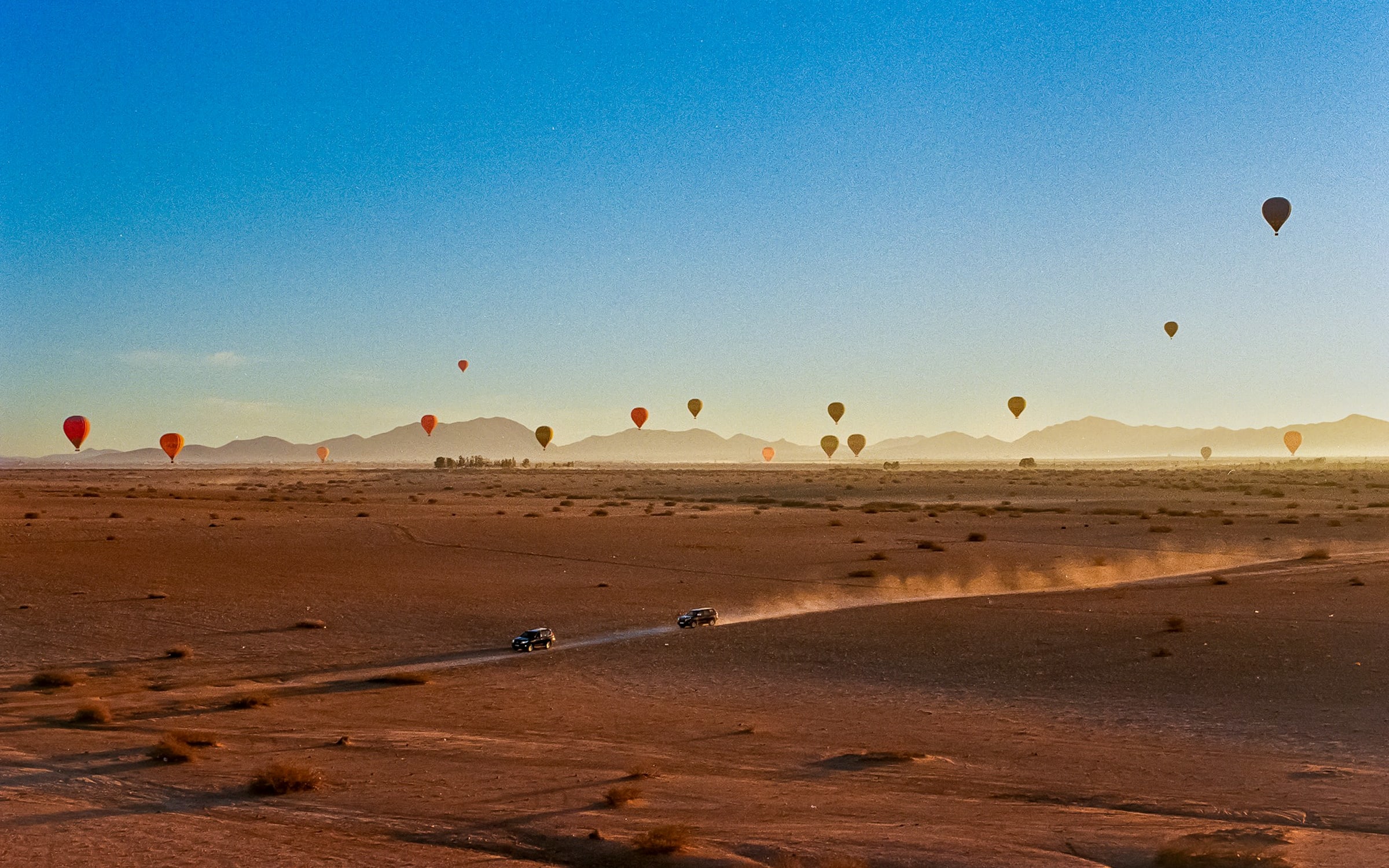
Forty-five minutes from the city, the Agafay desert offers soft rolling hills, lonely trees and the Atlas on the horizon — perfect for minimalist landscapes. The last hour before sunset paints everything gold, then pink. Camels, tents and lanterns add foreground interest. Read our Agafay desert guide.
The Tizi n'Tichka: roads and peaks
The road over the High Atlas is a photographer's playground: hairpin bends seen from above, red villages clinging to slopes, walnut trees and snowy summits in winter. A private driver can stop at safe viewpoints — something impossible on a bus. Early light from the east side or late light on the descent gives the most relief to the landscape.
Aït Ben Haddou: golden hour
The ksar is spectacular at sunrise and sunset, when the earthen walls glow orange and the tour groups have left. If you can, sleep nearby and shoot both. The classic view is from the opposite bank of the river; climbing to the granary gives wide panoramas over the valley. Details in our article on Aït Ben Haddou and the Tichka.
The Dades Gorge: the famous hairpins
The serpentine road of Tissadrine in the Dades Gorge is one of the most photographed roads in Africa. Shoot it from the café terrace at the top, ideally in the late afternoon. Combine it with the palm groves of Skoura — see Skoura and the Dades Valley in two days.
Atlas villages: life and texture
In the Ourika Valley and around Imlil, earthen villages, terraced fields and mountain streams offer endless subjects. Mornings are best, when the light is soft and the air clear. Respect privacy: always ask before photographing people or homes, and accept a refusal with a smile. A small payment is sometimes expected for portraits; agree beforehand.
Essaouira: blue and white
Essaouira's harbour at sunrise is unforgettable: fishermen unloading the catch, seagulls everywhere, rows of blue boats. The ramparts of the Skala are beautiful at sunset with the waves crashing below. The white-and-blue Medina is full of details and doors. See our Essaouira day trip.
Practical tips for photographers
- Light: Moroccan midday sun is harsh. Plan landscapes for early morning and late afternoon; use midday for interiors, souks and travel time.
- Dust: carry a blower and lens cloths, especially in the desert; change lenses inside the vehicle.
- Drones: drones are strictly regulated in Morocco and can be confiscated at customs without prior authorisation. Don't bring one unless you've obtained the necessary permits.
- Batteries and cards: charge in the vehicle — our vans have USB ports — and bring spare cards.
- People: ask before photographing; avoid photographing military sites, police and royal palaces.
For professional shoots and film crews, read our article on transport for film crews and photographers.
Why a private driver changes everything
Photographers need to stop suddenly, wait for the light, come back at sunset and leave before dawn. A private driver who understands this makes all the difference: he knows the viewpoints, the safe places to pull over and the best timing. With a van hire with driver, the vehicle becomes your mobile base — gear safe, batteries charging, water cold.
A sample 4-day photo itinerary
- Day 1: Marrakech — Koutoubia at dawn, Medina mornings, Jemaa el-Fna at blue hour.
- Day 2: Agafay at sunset, night sky photography.
- Day 3: Tizi n'Tichka, Aït Ben Haddou at sunset, night in a kasbah.
- Day 4: Aït Ben Haddou at sunrise, return via Telouet, or continue to Skoura and the Dades.
Great photographs are made by people who wait for the light. Plan your photo trip with us, and we'll build the timing around the sun.
Need a private driver for this trip?
Fixed price per vehicle, meet & greet and 24/7 WhatsApp support.