Road Safety in Morocco: Why a Professional Licensed Driver Matters
Mountain passes, night driving, livestock and fast motorways: what to know about Moroccan roads and why an experienced, licensed driver makes all the difference.
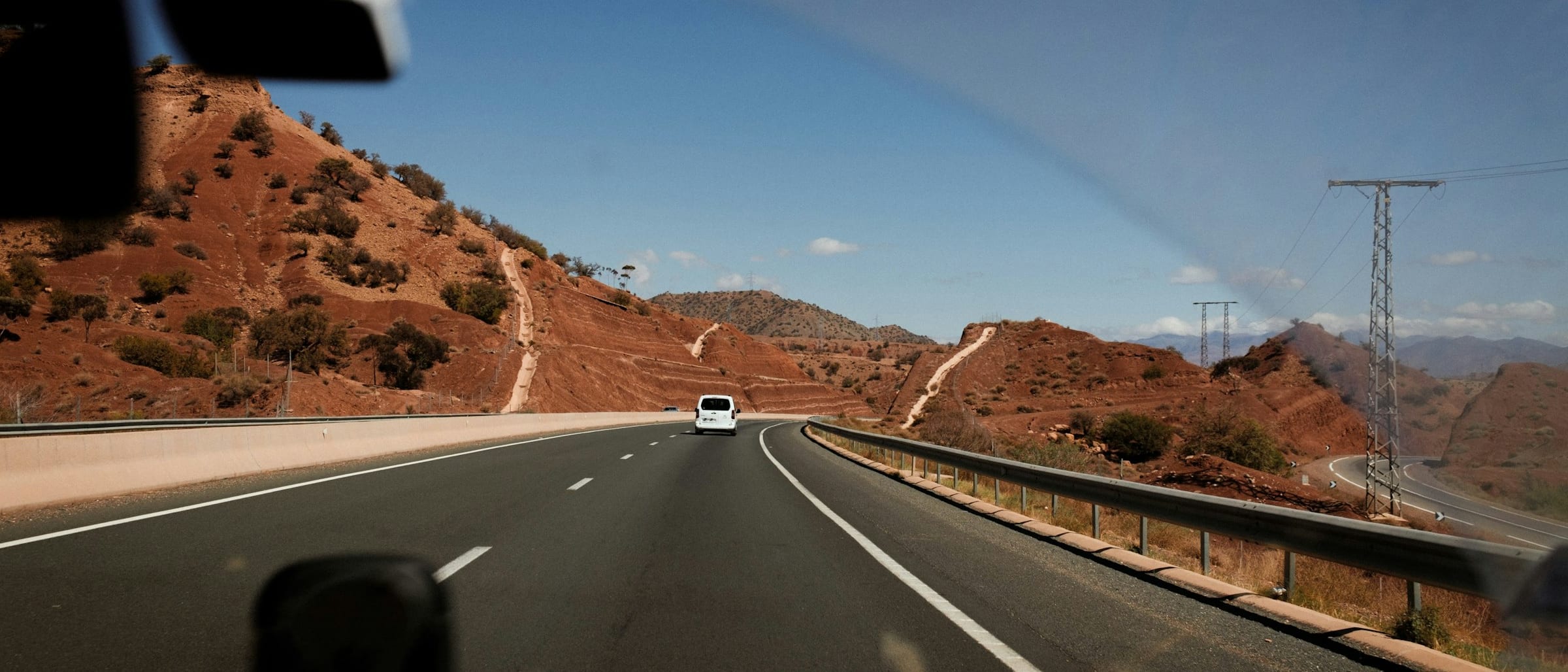
Morocco's road network has improved enormously over the last twenty years. Modern motorways link the major cities, and mountain roads like the Tizi n'Tichka have been widened and resurfaced. Yet driving in Morocco remains very different from driving in Europe or North America. Understanding these differences helps explain why so many travellers prefer a professional licensed driver — and what to look for when choosing one.
Moroccan roads at a glance
Motorways (autoroutes) connect Tangier, Rabat, Casablanca, Marrakech, Agadir, Fes and other cities. They are modern, tolled, well signposted and generally safe, with service areas every 40 to 60 km.
National roads link smaller towns and cross the mountains. They vary from excellent to narrow and winding, sometimes without hard shoulders or barriers.
Mountain roads, such as the Tizi n'Tichka (N9) between Marrakech and Ouarzazate or the roads to Imlil and Ourika, involve hairpin bends, steep gradients and sometimes falling rocks after storms.
Rural tracks lead to desert camps, villages and remote sites, often unpaved.
The real challenges
Mixed traffic. On the same road you'll find modern cars, heavily loaded trucks, grand taxis, mopeds, bicycles, donkey carts, pedestrians and livestock. Anticipation is key.
Overtaking on mountain roads. Slow trucks on long climbs tempt drivers into risky overtaking. Professional drivers know where it's safe to pass — and where it's not.
Night driving. Outside cities, roads are rarely lit, and unlit vehicles, carts or animals can appear suddenly. Experienced drivers reduce speed and stay alert.
Weather. Heavy storms can cause flash floods in valleys like the Ourika, and snow can occasionally close the Tichka pass in winter. Local drivers follow conditions closely.
Fatigue. Long distances — Marrakech to Merzouga is about 560 km — demand rest and planning.
Local driving habits. Roundabouts, priority rules and the use of the horn may surprise visitors. Police checkpoints are frequent and expect drivers to stop and show documents.
Why a professional driver makes the difference
Experience of the routes. A driver who crosses the Tichka every week knows every bend, every steep section and every safe place to stop. That experience can't be replaced by a GPS.
Licensing and insurance. In Morocco, transporting tourists for payment requires specific authorisations and insurance covering passengers. A licensed operator's vehicles are inspected and insured for this purpose. If something happens with an unlicensed driver, you may not be covered.
Rest and working hours. Serious companies plan rest periods and avoid excessive driving hours. On multi-day tours, the driver sleeps properly every night.
Vehicle maintenance. Brakes, tyres and air conditioning are checked regularly — essential on mountain roads and in summer heat.
Calm driving. A good professional drives smoothly and doesn't rush, even if you're running late. Your comfort and safety come first.
Knowing when not to drive. After heavy rain or snow, an experienced driver will recommend delaying departure or changing the route. That judgement is invaluable.
Should you rent a car instead?
Renting a car gives freedom, and many travellers do it successfully. But consider:
- You'll need to navigate unfamiliar roads, traffic and signage, often in Arabic and French.
- Parking near medinas is very limited, and cars can't enter the old cities.
- Mountain roads and night driving are demanding.
- You'll be responsible for fines, damage and police checks.
- You'll miss the scenery while concentrating on the road.
For families, groups and anyone who wants to relax, a private driver is the safer and less stressful choice — and often similarly priced once you add fuel, tolls, insurance and parking. See how much does a private driver cost.
How to check a transport company
Before booking, ask:
- Are your vehicles authorised for tourist transport and insured for passengers?
- How old are your vehicles, and how are they maintained?
- How experienced are your drivers on the routes I plan to take?
- Do all seats have working seat belts?
- What happens if a vehicle breaks down?
- Do you provide child seats?
A serious company answers clearly and without hesitation.
Your role as a passenger
Safety is also a shared responsibility:
- Wear your seat belt in every seat, front and back.
- Don't pressure the driver to go faster.
- Plan realistic days — no more than 5–6 hours of driving if possible.
- Tell the driver if you feel unwell or need a break.
- Avoid long drives at night in rural areas when possible.
Our commitment
Our vehicles are authorised for passenger transport, insured, regularly maintained and equipped with seat belts and air conditioning in every seat. Our drivers are experienced on Morocco's mountain roads, motorways and desert tracks, and they never compromise on safety. Discover our van hire with driver and our tours to Aït Ben Haddou and the Sahara — in safe hands.
Need a private driver for this trip?
Fixed price per vehicle, meet & greet and 24/7 WhatsApp support.


